
Microservice Architecture: Why It Matters for Large-Scale Applications
Explains what microservice architecture is, its advantages, and its impact on large-scale applications.


Microservice architecture can be described as a modular project that runs only the processes specific to a piece of business logic. If you follow the software world, you have probably heard the term microservices. At its core, a microservice is a software service responsible for delivering a specific feature or function within a software application — and serving a single purpose. Microservices are independent software services.
These services come with traits like being independently maintainable, deployable, and observable.
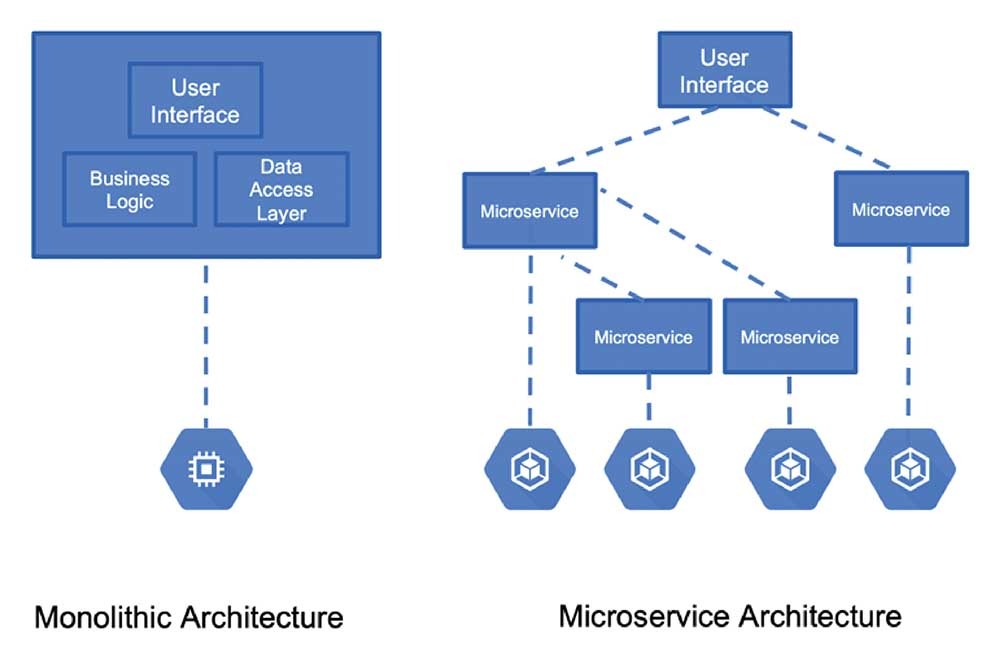
What Is Microservice Architecture?
In recent years, many projects have been built using microservice architecture. The microservice approach — where a single application is built as a modular structure, each part conceived as a small service that handles its own communication, with no needless complexity and minimal dependencies on other services — is the answer to "what is microservice architecture?". Microservices focus on the single responsibility they own, and the ability to run independently is their most important trait.
They also come with an automated deployment mechanism, which is a major part of the structure.
Being free of centralized management mechanisms is one of their most important traits. Built in a variety of programming languages and using database technologies to make processes more practical, microservice architecture plays an important role in large-scale applications.
What Are the Advantages of Microservice Architecture?
The use of microservice architecture in companies grows more common every day. There are many advantages driving that adoption. Each service can be thought of as a tiny project of a larger application. Looked at this way, the advantages of microservice architecture can be listed as:
Microservice architecture works well across different machines. All services are able to communicate with each other on their own. As a result, a new service can be developed without forcing changes in other services. That lets services run independently of each other.
Microservice architecture goes through the necessary stages in an automated way, which improves project quality.
Because each service is developed and tested independently, the application becomes higher quality and more flexible.
Every microservice architecture can be easily modified based on its own functionality, which is the advantage of independent development.
A problem in one service does not affect the others, so users can continue using the other services at any time.
Microservice architecture offers a major advantage in fault isolation. A problem in one service of the project does not affect the others, keeping the system running smoothly. The benefit of microservice architecture is significant from this angle as well.
What Are the Core Characteristics of Microservice Architecture?
The use of microservice architecture grows more popular every day. There are major advantages and core characteristics behind that. The core characteristics of microservice architecture are:
Decoupling,
Componentization,
Business capabilities,
Autonomy,
Continuous delivery,
Decentralized governance,
What Is the Impact of Microservice Architecture on Large-Scale Applications?
Among the most-researched topics in recent years is the impact of microservice architecture on large-scale applications. Microservice architecture, which delivers important advantages for large-scale applications, also brings benefits like scalability. Independent development and deployment, flexibility, technology independence, fault isolation, and ease of maintenance are among the most important reasons microservice architecture is chosen for large-scale applications.
By keeping the system from being affected by failures and ensuring it stays available, microservice architecture helps large-scale applications become more effective and successful.